




The short version
- Ulta Beauty now has four Gulf stores, opened across seven months: Kuwait, Mall of the Emirates, Dubai Mall and Red Sea Mall in Jeddah.
- It brought roughly ten US brands with it that were previously import-only or unavailable, including Ôrəbella, Morphe, Polite Society, LolaVie, Sacheu and Snif.
- Saudi Arabia is the actual prize, not Dubai — it is around 40% of GCC beauty spending and is forecast to generate roughly two-thirds of the region’s growth to 2030.
- Fragrance is the category driving the money, and it is where Gulf houses already beat the internationals.
- The risk sits with local brands. More shelf space for global names is not automatically good news for the homegrown labels that made the region interesting in the first place.
For years the Middle East was treated as somewhere beauty products were sold into — a distributor market, served from Europe, priced up, and stocked late. In 2026 that stopped being true. Three of the biggest specialty beauty retailers on earth are now opening physical stores in the Gulf, and they are bringing brands that Gulf shoppers previously had to order through a freight forwarder.
This is not a story about one shop opening in a mall. It is a story about distribution, and distribution is what decides whether you can buy a product, what you pay for it, and whether anyone bothers making a shade that suits you.
What actually changed in 2026
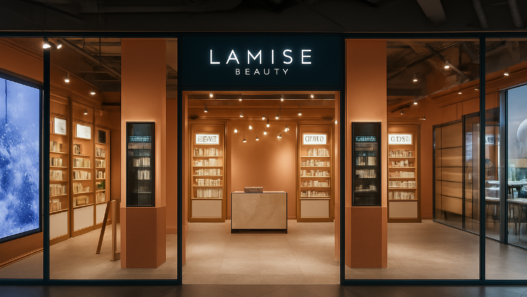
The clearest signal came from Ulta Beauty. The largest specialty beauty retailer in the United States had never operated a store outside North America until 2025. It now runs four in the Gulf, built out in partnership with Alshaya Group, the Kuwait-headquartered franchise operator that also brought Starbucks, H&M and Victoria’s Secret to the region.
The rollout was deliberately fast. Ulta’s own announcements put the sequence like this:
Ulta was not alone, and it was not first. Sephora has operated across the Middle East for years and has been expanding hard in Saudi Arabia. What made 2026 different is that the Gulf stopped being a late stop on a global rollout and started being an early one — in some cases the first international stop.
The brands that came with them
A retailer entering a market matters less than the assortment it carries. Ulta’s Gulf launch list included its own Ulta Beauty Collection plus a set of US brands that had no real regional presence: Ôrəbella (Bella Hadid’s fragrance line), Morphe, Polite Society, LolaVie, Sacheu, Better World Fragrance House and Snif, alongside Peter Thomas Roth and RMS Beauty.
Then the regional exclusives started landing on top of that:
- Florasis, the Chinese brand that has done more than any other to push C-beauty onto the global stage, expanded into three UAE Ulta locations — Dubai Mall, Mall of the Emirates and Dubai Hills Mall. That is C-beauty arriving in the Gulf through an American retailer, which tells you how unusual the current moment is.
- Haruharu Wonder, the Korean fermented-ingredient brand with a large TikTok following, chose the Middle East as an expansion market and launched exclusively at Ulta Beauty UAE.
- Vimi Joshi, the founder-led brand from the British makeup artist of the same name, made its entire Middle East debut as a Dubai exclusive.
A brand choosing Dubai for its first international launch would have been eccentric in 2023. In 2026 it is a strategy.
— Glimsera editorial
Traffic also started moving the other way. Moonglaze, founded by Yara Alnamlah, became the first Saudi beauty brand to be stocked by Sephora — which its founder framed as a door opening for local brands to sit beside international ones rather than beneath them.
Why the Gulf, and why now
The honest answer is that the numbers finally justified the shipping costs. The GCC beauty market is forecast to grow from about $10.5 billion in 2025 to $15.9 billion by 2030, a compound rate near 8.6% a year, according to Euromonitor data published in the 2026 GCC In Focus report. Very few regions of that size are compounding at that rate.
Dubai gets the headlines, but the spending is Saudi. The Kingdom accounts for roughly 40% of all GCC beauty spending and is projected to grow from about $6.0 billion to $9.6 billion by 2030 — around 9.7% a year, which works out to roughly two-thirds of every additional beauty riyal and dirham the region will spend between now and then. WWD puts the Saudi market at $8.1 billion today, driven by a young, digitally fluent population.
Per-capita spend is the figure that makes buyers pay attention: it has reached roughly $165 a head in Saudi Arabia, ahead of most of Western Europe on that measure. The Gulf is not a developing beauty market. It is a high-spend market that happened to be under-served.
Fragrance is the real prize
If you only track one category, track this one. Saudi Arabia’s fragrance market was worth about $2.9 billion in 2025 — the highest-value fragrance market in the entire GCC — and it is growing near 13.8% a year, accounting for roughly three-quarters of the Kingdom’s beauty growth. The UAE, meanwhile, is now among the world’s top ten perfume exporters by value, with exports up close to sevenfold over a decade.
Why this matters to you
Fragrance is the one beauty category where the Gulf is the global authority, not the customer. It is also the only major category here where men consistently outspend women. When a US retailer talks about “winning the Middle East”, what it usually means is winning fragrance — and it will be competing with Lattafa, Ajmal, Rasasi, Swiss Arabian, Arabian Oud and Abdul Samad Al Qurashi on their own ground.
The homegrown brands that made the region worth entering
It is tempting to read all of this as internationals discovering the Gulf. The sequence was closer to the reverse: local founders proved the demand existed, and the internationals followed the evidence.
Huda Beauty is the obvious template — a Dubai blog that became a global colour cosmetics business. What followed is less famous and arguably more interesting. Euromonitor consultant Mehr Shafiei has described the current wave bluntly: a market once served almost entirely by international brands with very little local manufacturing is now seeing an explosion of local brands, often influencer-led.
A short list of the names driving that:
- Peacefull (UAE, 2021) — founded by Emirati influencer Salama Mohamed after she could not find clean, results-driven skincare formulated for this region.
- Asteri (Saudi Arabia, 2023) — Sara Al Rashed’s makeup and skincare line, built deliberately for desert-climate wear.
- Mraya and Luna (Saudi Arabia) — science-led skincare from local founders, aimed at Saudi women first and global markets second.
- Shiffa (UAE, 2004) — the region’s most established homegrown skincare name, founded by Dr Lamees Hamdan.
- Moonglaze (Saudi Arabia, 2024) — now the first Saudi brand on Sephora’s shelves.
Ulta’s UAE launch week leaned into exactly this, spotlighting regional founders of homegrown brands with daily events and in-store appearances. That is not charity. Local credibility is the thing an imported retailer cannot manufacture, and it is the reason the industry has started asking whether “A-beauty” is positioned to do what K-beauty did a decade ago.
What this means for you as a shopper
Five concrete changes, in the order you will notice them:
- Fewer freight forwarders. Products that previously required a US proxy address — Sacheu, Snif, Polite Society — are now on a shelf in a mall you already visit.
- Launch windows are closing. The six-to-eighteen-month gap between a US or Korean launch and Gulf availability is shrinking toward zero for brands that treat the region as a priority. In some cases, as with Vimi Joshi and Haruharu Wonder, the Gulf is now ahead.
- Prices get more competitive, slowly. Three specialty retailers competing for the same shopper is better for you than one. Do not expect US pricing — import duty, VAT and rent are real — but do expect more frequent discounting.
- Shade ranges should improve. Retailers that take a market seriously stock the shades that market needs. This is the single biggest practical win for anyone with deeper or olive skin tones who has spent years buying the darkest shade available and hoping.
- Climate-appropriate formulation becomes a selling point. Brands pitching into the Gulf now have to answer the 45°C question: does this survive the heat, the humidity and the hard water? That pressure produces better products.
The part nobody says out loud
More global shelf space is not unambiguously good news, and it would be dishonest to present it that way.
The constraints on local brands have not changed. Fast Company Middle East has reported the same three obstacles repeatedly: competition from international brands, a shortage of funding, and the near-absence of local manufacturing infrastructure. Arab News has made the same point from the supply side — the Saudi beauty and cosmetics sector is still very new when it comes to local production.
Asteri’s founder Sara Al Rashed framed the difficulty precisely: the hot, dry climate demands hydration and sun protection, and a market crowded with local and international brands demands a genuine point of difference to stand out at all. A homegrown brand with no factory, limited capital and a six-SKU range is now competing for attention against a US retailer with a global marketing budget — inside the same mall.
What to watch for
If the next two years produce more global shelf space and more local manufacturing capacity, the Gulf becomes a genuine beauty origin market. If it produces only the shelf space, the region ends up a very profitable distribution channel for brands headquartered somewhere else — which is roughly where it started.
What to watch in 2027
- Whether Ulta keeps opening or consolidates. Four stores in seven months is a land-grab pace. The second phase tells you whether the economics worked.
- Arabic-language and Arabic-first brand building. Most of this expansion is still happening in English. The first international brand to build properly in Arabic will have an advantage that is hard to copy quickly.
- Whether a second Gulf brand follows Moonglaze onto global shelves. One is a milestone. Three is a trend.
- Local manufacturing announcements. This is the real signal. Formulation and fill-finish capacity in the GCC would change the cost structure for every homegrown brand at once.
Why trust Glimsera
We are a Middle East beauty publication, not a global title with a regional page. Everything we publish is written for people buying in AED and SAR, in this climate, from these retailers.
Meet our experts
Twelve years covering beauty retail across the GCC. Edits and fact-checks every market and trend piece on Glimsera.
Tracks assortment, pricing and launch timing across Sephora, Faces, noon and Ulta in the UAE and Saudi Arabia.
Reviews all claims relating to skin, formulation and climate for medical accuracy before publication.
Frequently asked questions
Which global beauty brands entered the Middle East in 2026?
The largest single entry was Ulta Beauty, which opened in Kuwait in November 2025 and then across the UAE and Saudi Arabia through 2026, bringing US brands including Ôrəbella, Morphe, Polite Society, LolaVie, Sacheu, Better World Fragrance House, Snif, Peter Thomas Roth and RMS Beauty.
Separately, the Chinese brand Florasis expanded into three UAE locations, and the Korean brand Haruharu Wonder and the British brand Vimi Joshi both chose the UAE for their Middle East debuts.
Why are global beauty brands expanding into the Middle East now?
Market size and growth rate. GCC beauty is forecast to grow from roughly $10.5 billion in 2025 to $15.9 billion by 2030. Saudi Arabia alone accounts for about 40% of regional spending, with per-capita beauty spend around $165 — ahead of most of Western Europe. Add a young, digitally connected population and few markets of that scale are growing as fast.
Is Ulta Beauty open in Dubai?
Yes. Ulta Beauty opened at Mall of the Emirates on 29 January 2026 and at Dubai Mall on 27 March 2026. A Jeddah store at Red Sea Mall followed on 7 May 2026. All are operated in partnership with Alshaya Group.
Will beauty products get cheaper in the UAE because of this?
Modestly, and not immediately. Three specialty retailers competing for the same shopper tends to produce more frequent promotions rather than lower list prices. Import duty, VAT and retail rent still apply, so Gulf pricing will stay above US pricing on most imported brands. The bigger near-term win is availability, not price.
What is “A-beauty” and is it the next K-beauty?
A-beauty is shorthand for Arab beauty — products built around regional ingredients and rituals such as oud, saffron, henna and black seed, often by influencer-founded local brands. The comparison to K-beauty is being made seriously within the industry. The difference is infrastructure: Korea had a mature contract-manufacturing base before it exported. The Gulf largely does not yet, which is the main thing standing between A-beauty and a genuine export wave.
Which Middle East beauty brands are worth knowing?
For skincare: Peacefull, Shiffa, Mraya and Luna. For makeup: Asteri, Moonglaze, Han Makeup and Bassam Fattouh. For fragrance: Lattafa and Afnan at the accessible end, Ajmal, Arabian Oud and Abdul Samad Al Qurashi for heritage oud, and Amouage at the luxury end.
Is Saudi Arabia a bigger beauty market than the UAE?
Considerably. Saudi Arabia is the largest beauty market in the GCC at roughly $8.1 billion, around 40% of regional spending, and is forecast to deliver about two-thirds of the region’s growth to 2030. The UAE is the commercial and retail hub — where brands launch and base their regional teams — but Saudi is where the volume sits.
Does this expansion hurt local Middle East beauty brands?
It can. Local founders consistently name three obstacles: competition from international brands, limited funding, and almost no local manufacturing capacity. More global shelf space intensifies the first of those without fixing the other two. Retailers spotlighting regional founders at launch helps visibility, but it does not change a homegrown brand’s cost base.
Sources
- Ulta Beauty — UAE entry announcement and store dates
- Global Cosmetic Industry — Ulta’s Middle East rollout
- BeautyMatter — Florasis into the Middle East via Ulta
- Playbook of Beauty — GCC 2025–2030 forecast (Euromonitor data)
- WWD — Saudi Arabia’s $8.1bn beauty market
- BeautyMatter — Saudi per-capita spend and UAE perfume exports
- Arab News — GCC homegrown skincare and local production
- BeautyMatter — MENA brands to watch
Read next


