



Quick Summary
Glimsera Score: 7/10 · Confidence: Medium
Best for: Anyone with dry, sensitive, post-procedure or barrier-compromised skin wanting a gentle, fragrance-free hydrator.
Not ideal for: Bargain shoppers, strict vegans (most PDRN is fish-derived), or anyone expecting a retinoid-level anti-ageing fix.
Key takeaways
- PDRN (polydeoxyribonucleotide) is a DNA-derived ingredient, usually from salmon or trout, valued for supporting skin repair and barrier recovery.
- Topical PDRN works mainly in the epidermis to soothe and hydrate — it complements, not replaces, injectable PDRN or anti-ageing actives like retinoids.
- Higher ppm isn't automatically better; experts note diminishing returns past a certain concentration, with well-rounded formulas mattering more.
- Dr. Reju-All's hero cream pairs 1,200 ppm salmon PDRN with niacinamide, glycerin, panthenol and hyaluronic acid for a fragrance-free, barrier-friendly finish.
- PDRN moisturisers span a wide price range, from roughly $22 up to $30+ for smaller tubes.
Topical PDRN skincare exploded out of K-beauty clinics. Here's what the regenerative ingredient actually does — and how to judge a formula that's worth your money.
4 min read · Updated Jun 24, 2026 · Confidence: Medium · 1 verified source
In this article
PDRN — the DNA-derived ingredient that powered K-beauty’s so-called “salmon sperm facial” — has jumped out of the clinic and into your moisturiser. Topical PDRN now appears in serums, sheet masks, lip balms and creams, with brands from The Inkey List to Medik8 and Medicube crowding the shelf. The honest verdict from experts and reviewers: a good PDRN cream behaves like a smart, soothing barrier moisturiser — useful, but not magic.
What is PDRN, actually?
PDRN stands for polydeoxyribonucleotide, a fragment of DNA traditionally sourced from salmon or trout. It’s prized for regenerative properties. As Dr. Ethan Wonuk Hwang, Chief Medical Director of Cheongdam Lebelle Clinic in Seoul, explains, “PDRN acts as a biological signal that encourages damaged tissues to repair themselves.” It has a long track record in injectable treatments for skin quality, wound healing and post-procedure recovery.
Topical vs injectable PDRN: the key difference
The distinction isn’t just how it’s applied — it’s where it ends up. According to Hwang, injectable PDRN is delivered directly into the dermis, where fibroblasts and blood vessels live, and can activate adenosine A2A receptors to stimulate collagen.
Topical PDRN, by contrast, functions as a cosmetic and works mainly within the epidermis to support the skin barrier, reduce irritation and aid recovery. “Topical PDRN is not intended to replace injectable treatments,” says Sang Myung Han, innovative team lead at Dr. Reju-All. “Rather, it should serve as a complement to your routine.” Hwang frames it neatly: “It’s like exercise versus physical therapy. They may target similar goals, but the intensity and outcomes are very different.”
How much PDRN should a product contain?
Concentrations on the market vary wildly — anywhere from 100 ppm up to 10,000 ppm. But more isn’t automatically better. “People often assume that higher ppm automatically guarantees greater efficacy, but that’s a big misconception,” Hwang says. “A product containing 10,000 ppm PDRN does not mean that it’s ten times more effective than a product containing 1,000 ppm. In fact, beyond a certain threshold, increasing the concentration may provide diminishing returns.”
This is why Dr. Reju-All landed at a modest 1,200 ppm for its hero cream, pairing PDRN with familiar supporting ingredients: oil-balancing niacinamide, moisturising glycerin, barrier-supporting panthenol and hydration-boosting hyaluronic acid. The benefit lies in the synergy of the full formula, not a single headline number.
Ingredient highlights
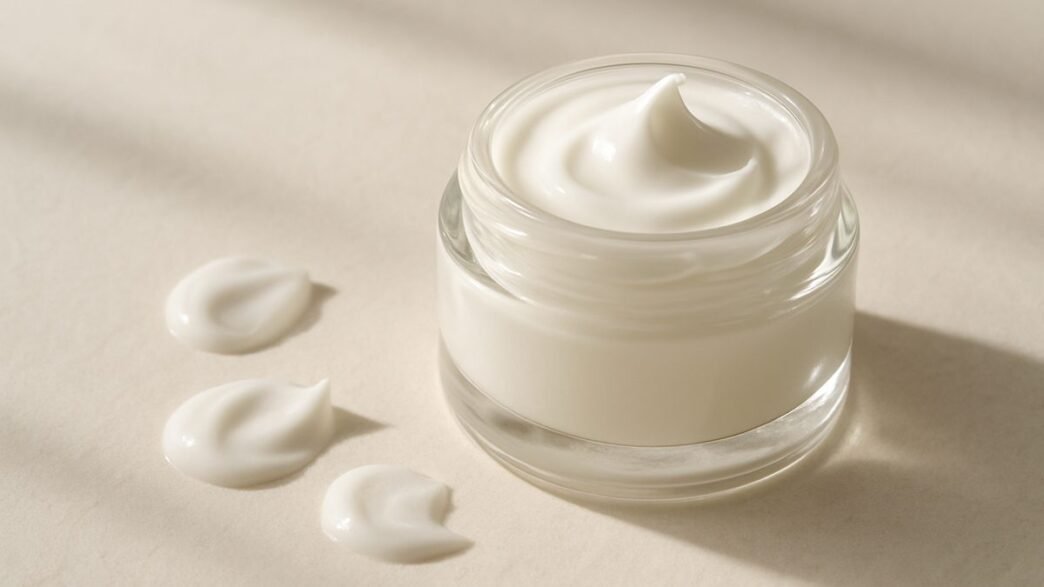
The strongest topical PDRN formulas read like a barrier-repair shortlist. Reporting on Dr. Reju-All’s Advanced PDRN Rejuvenating Relief Cream notes it contains 1,200 ppm of salmon-derived PDRN, soothes and strengthens with niacinamide, glycerin and panthenol, carries no added fragrance or aggressive actives, and is described as non-comedogenic and suitable for all skin types in a clear gel-cream texture.
Pros and cons
Online testimonials and editorial coverage frame the better PDRN creams as quietly reliable rather than flashy.
Pros
- Soothing, deeply hydrating finish without greasiness
- Fragrance-free, low-irritation formulas suit sensitive and acne-prone skin
- Versatile — layers under sunscreen and makeup without pilling
- Supports post-procedure and barrier recovery
Cons
- Premium pricing for relatively small tubes
- Usually fish-derived, so not vegan or vegetarian friendly
- Won’t replace retinoids or clinical treatments
Value for money
PDRN moisturisers sit at the affordable-premium end of skincare. For reference, popular options from Medicube and ANUA have retailed around $22 and $24, while Dr. Reju-All’s cream has been cited at $29.90 for a 0.7 fl oz tube — pricier per millilitre, though still short of luxury-moisturiser territory.
| What to weigh | Why it matters |
|---|---|
| PDRN ppm | Moderate (≈1,000–1,500) is plenty; higher offers diminishing returns |
| Supporting actives | Niacinamide, panthenol, glycerin, HA do much of the visible work |
| Fragrance | Fragrance-free is safer for reactive or post-procedure skin |
| Source | Most PDRN is salmon/trout-derived; vegans need a ceramide alternative |
Who should buy
PDRN creams make most sense for dry, sensitive, reactive or post-procedure skin that wants gentle hydration and barrier support. They’re also genuinely low-risk to add to an existing routine. One reviewer reports passing tubes to friends with sensitive and acne-prone skin who responded well, including one whose rosacea-related redness and dry patches calmed down.
Alternatives worth considering
If a flagship PDRN cream is out of budget or off-limits, there are sensible swaps depending on your priority.
| Option | Best for |
|---|---|
| PDRN gel-cream | Sensitive, dry or post-procedure skin wanting soothing hydration |
| Ceramide barrier cream | Vegans/vegetarians and ingredient-avoiders needing barrier repair |
| PDRN serum or sheet mask | Trialling PDRN or layering into a fuller routine |
Why this matters
PDRN’s leap from clinic to bathroom shelf reflects a broader K-beauty trend: borrowing language from aesthetic medicine to elevate everyday skincare. The smarter move for shoppers is to enjoy PDRN for what it is — a soothing, regenerative-leaning support ingredient in a well-built moisturiser — while keeping proven actives like retinoids and sunscreen doing the heavy lifting.
What people are saying
Aggregated from independent reviews, forums, and reporting — not first-hand testing.
Coverage and online chatter frame topical PDRN — and Dr. Reju-All's cream in particular — as a well-formulated, no-frills hydrator rather than a miracle. A Refinery29 beauty reporter who initially dismissed the category reports using it daily for months, and dermatologists interviewed emphasise it's a supportive ingredient, not a retinoid replacement.
- Deeply hydrating, 'chok chok' dewy feel without greasiness or stickiness
- Fragrance-free and non-comedogenic, plays well with sensitive and acne-prone skin
- Layers cleanly under sunscreen and makeup with no pilling
- Anecdotally calmed redness and dry patches for one rosacea-prone user
- Premium price for a small tube relative to other PDRN moisturisers
- Most formulas are salmon-derived, so unsuitable for vegans/vegetarians
- Not a substitute for clinical injectables or established anti-ageing actives
Product types worth considering
Glimsera may earn a commission from links in this section, at no extra cost to you.
- Topical PDRN gel-cream moisturiser — The core of the category — a lightweight, fragrance-free PDRN cream layered with niacinamide, glycerin and panthenol delivers soothing hydration and barrier support morning and night.
- Ceramide barrier cream (PDRN alternative) — A good fit for vegans, vegetarians or anyone avoiding fish-derived ingredients who still wants barrier repair and calming hydration.
- PDRN serum or sheet mask — A lower-commitment way to add PDRN to an existing routine, ideal for layering under a moisturiser or for post-procedure recovery days.
The Glimsera Take
PDRN has graduated from clinic injectables to a genuinely useful topical category, and the better creams behave like well-built barrier moisturisers with a soothing edge. It's worth trying if your skin runs dry, reactive or post-procedure — just calibrate expectations. The main risk is paying a premium for marketing: PDRN supports your skin's own repair, it doesn't replace proven actives.
Verified Sources
What we checked: Cross-referenced 1 source; confidence rated Medium. Glimsera synthesises multiple sources and does not test products first-hand; product claims reflect the cited reporting.
Last updated June 24, 2026

Written by the Glimsera Team, your go-to source for all things beauty and hair care. Our passionate experts combine years of industry experience with a love for enhancing natural beauty. We’re dedicated to providing you with the latest tips, trends, and product recommendations to help you look and feel your best. Join us on this journey to discover effective hair care routines, beauty secrets, and empowering insights tailored for every individual.